
1. Marine Mammal Surveys on the Scotian Shelf
Document the occurence of marine mammals on the Scotian Shelf
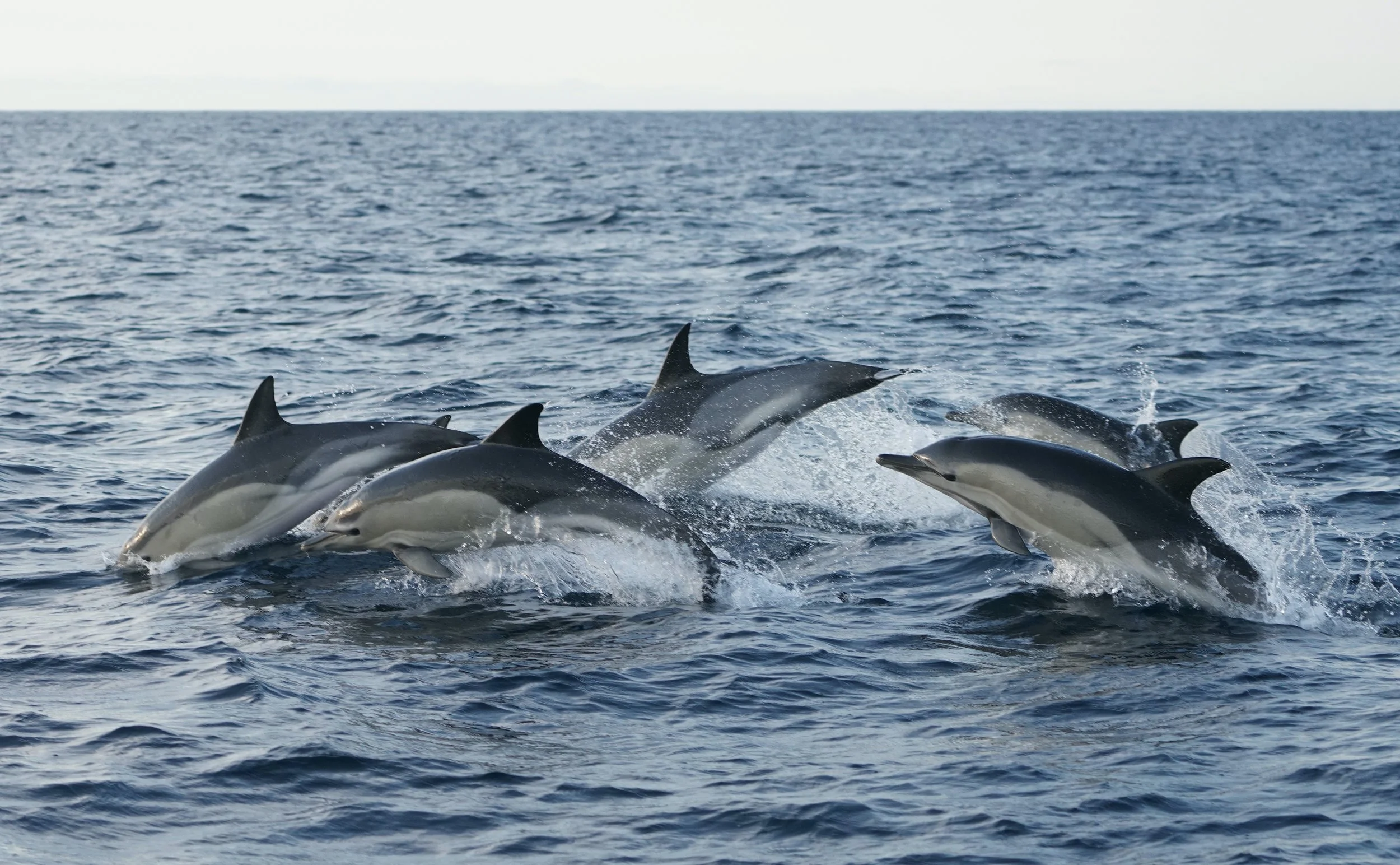
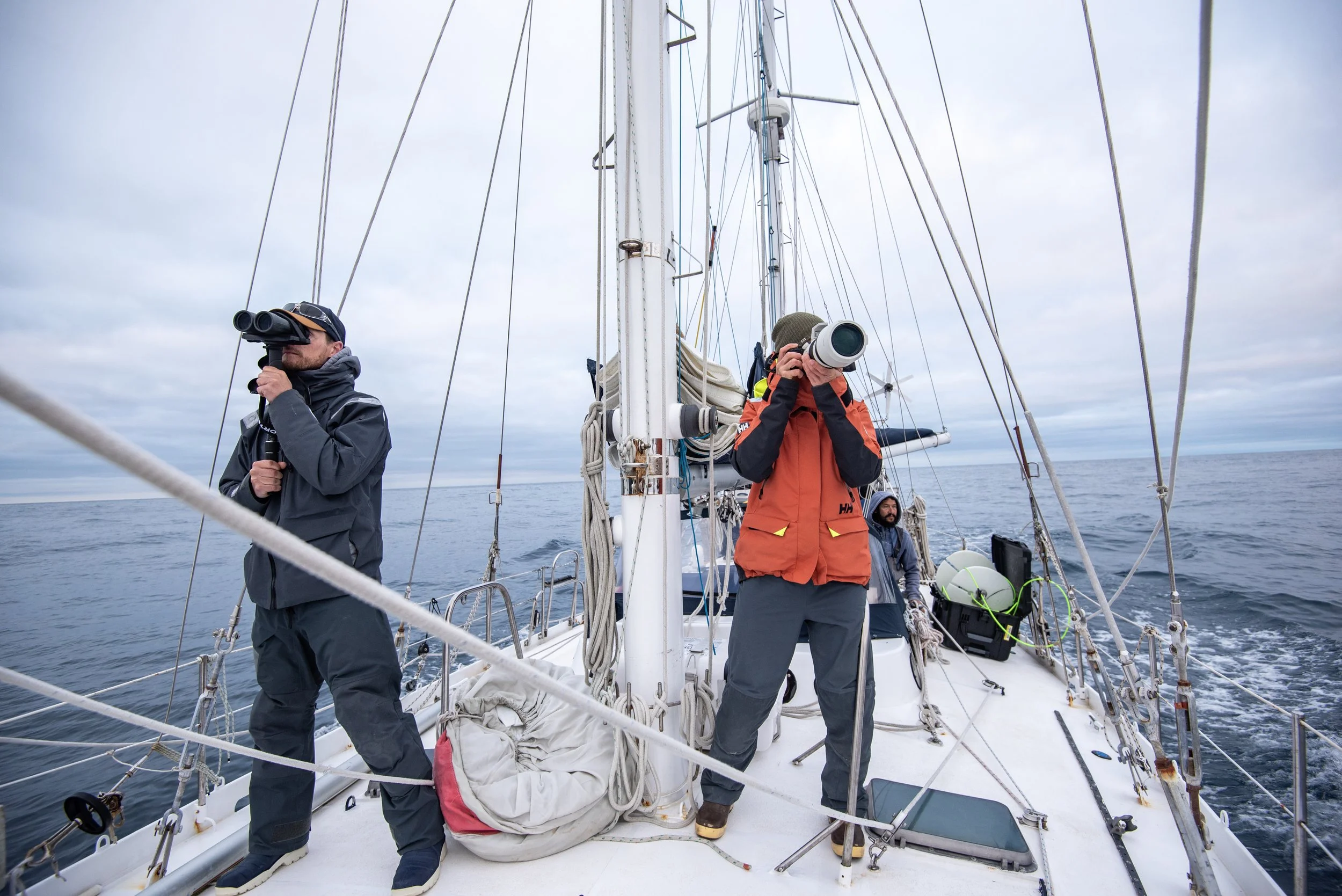
In 2025, we started conducting visual surveys on the Scotian Shelf, with a focus on areas set aside for offshore wind energy development. While the Scotian shelf and slope have been the object of continued acoustic monitoring for the last ~15 years, visual monitoring, which is more appropriate to identify acoustically cryptic species (e.g. minke whales), distinguish species with similar calls (e.g. common and Atlantic white-sided dolphins), or detect species during periods of low sound production rate (e.g. fin whales in late spring and early summer), has been extremely limited. There is therefore a need for dedicated marine mammal visual surveys off Nova Scotia.
The primary objective of our surveys is to document the presence and diversity of marine mammal species occurring in and around areas designated by the Nova Scotia Government for offshore wind development. We intend to conduct a minimum of two 1-2- week surveys per year from May to October to generate a baseline against which potential changes in marine mammal occurrence during pre-construction surveys, turbine installation and wind farm operation can be assessed. By starting years ahead of potential development, we can characterize and understand naturally-occurring, annual changes in occurrence and better assess the severity of potential changes induced by offshore wind development.
2. Baleen whale studies on the Scotian Shelf
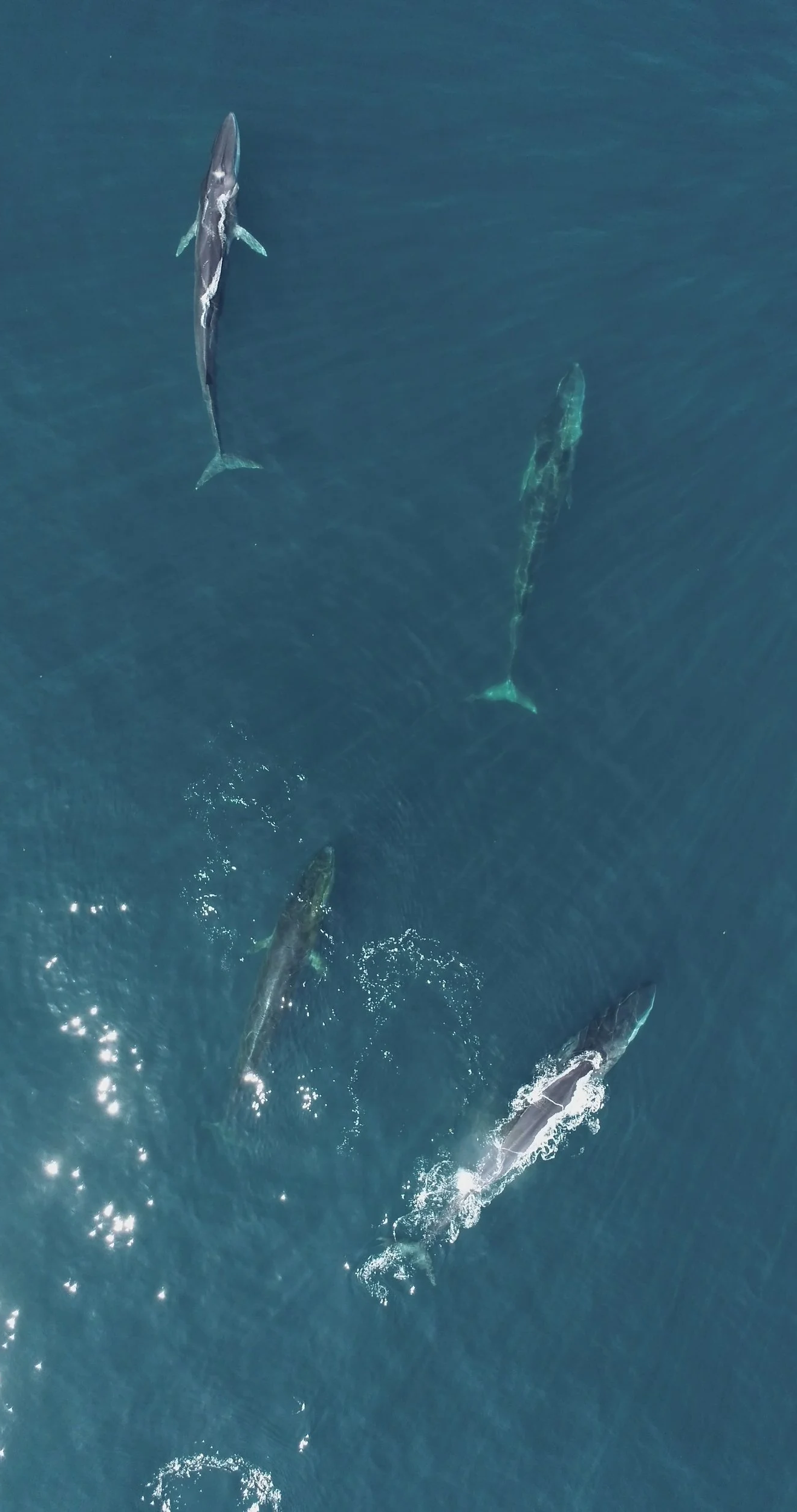
The roots of the Whale Research Collective are deeply connected to baleen whales. Two species that we have collectively studied intensively are the fin and blue whale. They are respectively listed as Special Concern and Endangered under the Species at Risk Act. While these two species have been relatively well studied in parts of eastern Canadian waters, such as the Gulf of St Lawrence, we have a limited understanding of their biology or numbers on the Scotian Shelf, where they are distributed further offshore and therefore less accessible for research. The same can be said of other baleen whales in this area. Acoustic monitoring and satellite telemetry studies have led to the designation of an important foraging habitat for blue whales along the Scotian slope, but there is limited visual confirmation of its actual frequentation by, and importance to, this species.
Our research objectives are to:
Document the presence of fin, blue and other baleen whales on the Scotian Shelf and along the Scotian slope and identify important areas for these species.
Photo-identify individuals, which allows assessing seasonal and inter-annual residency in specific areas or movement between areas (including sites beyond the Scotian shelf).
Collect biopsies to assess gender using DNA contained in the skin while sub-cutaneous blubber samples let us evaluate female pregnancy rate and conduct diet analyses.
Collect aerial images using a Remotely Piloted Aircraft System (RPAS), aka drone. All photographs will be assessed for any evidence of scarring from past entanglement or vessel collision, whose prevalence and severity remain unknown. Aerial images will increase precision and sample size of scarring analysis by providing images of body parts more likely to be involved in entanglements and usually not visible from a boat (e.g., flippers, mouth, peduncle and leading edge of the fluke) (Ramp et al. 2020). In addition, aerial images will be used to make morphometric measurements of individuals and allow estimating body condition, which will be related to gender and reproductive status (pregnant or not).
Our findings will be shared with government agencies to improve the status assessment of these species and conservation measures and outcomes.
2025 - Progress
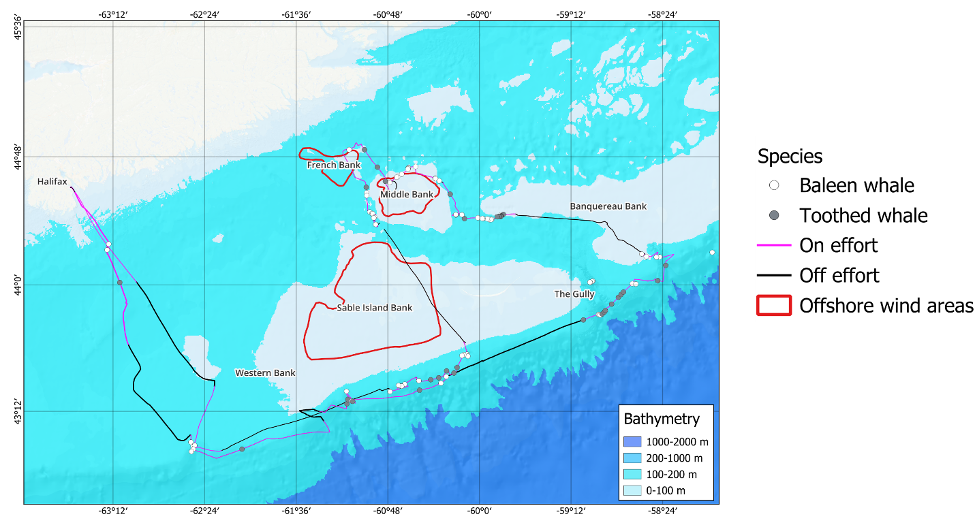
Summer 2025 survey tracks and locations of marine mammal sightings, in relation to proposed offshore wind areas.